Showing posts with label War. Show all posts

Thursday, April 25, 2013

Terrorism And The Threat To Milwaukee

 
Photo Credit: Dan Lampariello
  On April 15, the United States of America suffered the first successful terrorist attack on innocent civilians in the homeland since 9/11. The gruesome images from the Boston Marathon bombing will be forever engrained in the minds of Americans. As the investigation into the suspected terrorists moves forward, one thing is clear; the bombers were radicalized Muslims who blended into American society. FBI sources say that the bombers’ methods, techniques, and training are sophisticated enough to suggest they may be part of a larger sleeper cell organization, with possible ties to Al-Qaeda. Sleeper cells can go undetected or overlooked in any American city, including right here in Milwaukee. If terrorist sleeper cells that have blended into society become active, is Milwaukee safe? 

  To answer that question, one must look at factors of metropolitan preparedness, risk analysis, and Milwaukee’s methods of risk mitigation. Emergency preparedness for a terrorist event, accident, or natural hazard is the first line of defense in minimizing potential for loss of life and property. Emergency management officials say that every citizen should have basic items on hand in the event of an emergency, such as water, food, and first aid kits. In extreme emergencies, Milwaukee metropolitan counties would operate under an incident command system to coordinate efforts. Mutual aid agreements, protocols, and standardized operations exist to mobilize local, state, and federal resources as needed. First responders of every county have training in responding to any emergency event, including a terrorist attack, and participate in drills to recreate the chaos following a terrorist event. 

  Most wouldn’t think of Wisconsin as a potential Al-Qaeda target; however the marathon bombings show us that any event in any city is a potential target for people who are indiscriminant in killing. Wisconsin Homeland Security has dealt with droughts, floods, and hazardous accidents in the past, and recognizes the risk of terrorism in Wisconsin. Wisconsin has a reputation as an agricultural center, and proximity to Chicago and Minneapolis add additional risk to Wisconsin population centers. Because 5 of the 10 largest cities in Wisconsin are in the Milwaukee metro area, these population centers put Southeast Wisconsin at a greater risk for a terrorist attack. Risks include Wisconsin’s critical infrastructure, public gathering sites, large water systems, utilities, agriculture industry, and critical manufacturing sites. A Wisconsin Hazards Vulnerability Report uses factors such as probability, preparedness, and impact to create a relative threat risk. The relative threat risk to Milwaukee metro for a radiological attack is 63%, which is lower than the multiple vehicle highway accident relative threat of 52%. An influenza pandemic received the highest relative threat score of 81%. Officials maintain that the largest threats to the Milwaukee metro are influenza pandemics, rail accidents, and extreme weather. 

  Terrorism and sleeper cell potential has prompted authorities to take a proactive stance on risk mitigation. Waukesha County Emergency Management Coordinator William Stolte explains that Waukesha County trains first responders to maintain situational awareness in a terrorist event, including awareness on secondary devices and hazards. Sheboygan County conducts frequent drills and exercises under county Director of Emergency Management Steven Steinhardt. One exercise included the annual NASCAR Nationwide event hosted in the county. 

  Event planning is key in minimizing security risks at public gatherings. Steve Fronk, Milwaukee Director of Emergency Management helps event organizers with security. Fronk also leads a group called Urban Area Security Initiative, a federal grant program for 5 metro counties to assess security risks and potential regional impacts. Any response to a terrorist attack would be event dependent. Specifics of response plans were not given to protect first responders. However, the Milwaukee Sheriff’s Department doesn’t believe security and event planning were the issues in Boston. The Sheriff’s Department is concerned with the lack of intelligence coming out of local fusion centers, which relay information to authorities. Sheriff David Clarke believes there are mounting counterterror intelligence issues. This comes after the grant program designated to Milwaukee for terrorism response was cut due to federal risk analysis. With decreased federal funding for local intelligence gathering, authorities must rely on a vigilant and aware public. WI Watch is a local program where citizens are urged to report any suspicious activity to counter terrorist threats. WI Watch, in conjunction with federal programs like the ‘If You See Something, Say Something’ campaign urges the public to report suspicious activities and behavior to authorities. An aware public is the best way to minimize terror related risks. 

  The Milwaukee metropolitan area uses preparedness, risk assessments, and first responder training to prepare for emergency situations. The cooperation between metro counties ensures Milwaukee is a generally safe city. However, after the terrorist attack in Boston and ensuing manhunt which shut the city down, officials are not willing to downplay terrorist risks to the Milwaukee area. Increased security measures in neighboring Chicago may make the Milwaukee area a more attractive target for terrorist sleeper cells. A vigilant and aware public may just be the deterrent needed to avoid terrorism in Milwaukee. If you see any suspicious activities or behavior, report it to 1-877-WIWATCH. Together, we can minimize the risk of terrorism and keep the Milwaukee metro area safe.

Freedom Weekly, April 2013 Vol. 003 Issue 009

Saturday, March 30, 2013

Should US Take North Korea Seriously?

             Shame on North Korea.  The North Korean leadership continues to escalate bellicose rhetoric and actions.  Yet, most Americans believe if the talk turns to action, America will turn North Korea into a parking lot.  Most analysts don’t believe North Korea is anywhere near having the technological capabilities to build a nuclear missile, much less deliver one to the American homeland.  However, we should not write off Dictator Kim Jong-un so quickly, as an initial attack could inflict serious damage to the United States and allies.

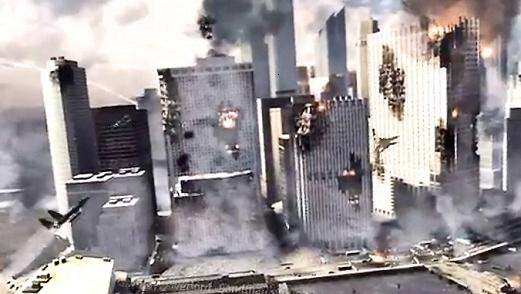
            Kim Jong-un has ramped up war preparations in the past few months.  North Korea detonated a small nuclear device on February 12, 2013.  Since then, the state controlled media released a propaganda video which depicted a destroyed city resembling New York. 
The nation has said it will no longer abide by the 1953 armistice agreement, which restored the border between North and South Korea following the Korean War.  Kim Jong-un has issued multiple and direct verbal threats to the United States, South Korea, Japan, and others.  The dictator cut the direct line between Seoul and Pyongyang.  Can one imagine if the Soviet Union had done this during the Cuban Missile Crisis?  The North Korean leader has readied military forces, conducted training exercises, and Fox News reports is entering a 'state of war.'  There are seemingly no serious thoughts of an attack on America, yet the United States’ show of force by flying B-2 stealth bombers over South Korea may be an indicator that there is more than meets the eye.

            A new series of released photos in the North Korean war room may inadvertently show a North Korean ‘U.S. Mainland Strike Plan.’  On these maps appearing in the photos, Guam, Hawaii, Washington D.C., and Austin, Texas as potential targets.  Each is obviously a strategic military target.  While analysts dismiss a mainland attack, North Korea has other means to employ, which would more likely resemble a terrorist plot than an invasion.  As a non-party to the Chemical Weapons Convention, North Korea has an estimated 5000 tons of chemical weapons.  They have the demonstrated ability to detonate a small nuclear device, which could lead one to believe they have the capability to initiate a dirty bomb style attack.  In an article on March 30, 2013 by Jim Michaels of USA Today, some analysts believe that an initial attack could be potentially damaging as Kim Jong-un would attempt to overwhelm opposing forces by sheer volume of attacks. 

            North Korea’s best ally and protectorate is China.  Recent and frequent cyber attacks have targeted financial institutions, energy companies, and even the U.S. military.  The cyber attacks are seemingly coming from China.  While the Chinese government vehemently denies involvement in the hackings, one must consider the possibility of a rogue group, or even North Korean operatives attempting to steal the information necessary to aid Kim Jong-un’s quest in creating a nuclear missile warhead.  North Korea, much like their Chinese counterparts, has a state controlled communist media outlet.  Leaked videos and photos from North Korea very well could be to distract from true targets in the event of an attack.  New York, Los Angeles, Washington D.C., Austin, Guam, Hawaii, Seoul, Tokyo, and U.S. military bases have all been singled out by North Korea.  But with chemical warheads and dirty bomb style attacks, cities such as Chicago, San Diego, and St. Louis can not be ruled out as potential targets in an attack. 
Even Milwaukee could be targeted, playing host to homegrown events like Summerfest, or even with the agricultural reputation of the state.  The Department of Homeland Security obtained information that terrorist groups had planned to attack smaller American cities to demoralize the populace’s feeling of safety within the homeland.  A North Korean attack on the mainland would be more similar to a terrorist attack, thus voiding the possibility of a safe feeling anywhere.

            It is unclear how serious Kim Jong–un is about going to war.  It would be an unlikely scenario if the dictator was unaware of the forces that would come down upon his country in the event of an actual war.  However, this is the present problem.  All of the rhetoric is reactive.  There seems to be no sense of a need to preemptively stop possible North Korean aggression against South Korea, Japan, and the United States.  While the rhetoric is increasingly belligerent, the reaction is increasingly reactive.  A more proactive approach to North Korea now could prevent reactive actions if North Korean rhetoric turns to action.  However, much like the Cold War, foreign relations with the rogue nation is much like a game of chess, calculated and precise.  If we play our pieces correctly, we can avoid a war-like conflict with North Korea.  We should still go about our days normally, yet aware of the gravity of the situation.  Awareness to the possibilities could be the ultimate American weapon.  Should the North continue down the path of war, an ignorant America simply writing them off could be Kim Jong-un’s greatest weapon.  Proactive foreign policy and an aware population can change the discourse of North Korea.  The time has come to change our reactive attitudes into proactive ones, thus avoiding the potential need to turn North Korea into a parking lot altogether.

Referenced Articles On North Korea: